Many music videos sexualizing women and creating the illusion of a woman as a sexual object, almost like a prop of the music videos. These music videos are spread across all genres of music including hip hop, pop, rock and country.
I think we can only judge the intent of the music video to a certain extent. I as a woman who feels very strongly about the empowerment of women find it quite difficult sometimes to distinguish between the fine line of exploitation and empowerment. I struggle to understand the artists intentions when it comes down to the meaning of the music video, especially when it comes to female artists. I think this is tricky to understand because in some cases such as many of the Britney spears videos we cannot tell which ones are Britney representing women as strong and unafraid to show their body or are her trying to conform to expectations and stereotypical roles of women for audiences and within the music industry.
 For example this mid shot of 50 cent surrounded by three women in his music video in da club, in a way represents his mind set as an artist and what ideals he wants to put out there. The use of a mid shot allows us to see most things in the shot close enough to see everything in detail but not too close so we could not see all the elements. In this shot he has chosen to put the women in bikinis showing off their body. However i feel like the purpose of this shot was not too give power to the women as they are laying on him and he is in the front of the shot, presenting them as props in the background. Instead he is probably trying to attract male views by using the women as sexual objects.
Laura Mulvey wrote a theory called the male gaze in 1975 before most of these music videos were created. It presented the question of are women filmed differently in music videos to women? are women represented as weak and sexual objects and are men presented and filmed at angles and in ways that makes them seem powerful and attractive too audiences?
What are the expectations of female artists? and why do they have different expectations to their male counterparts? why has it become a role in society for women to be looked at in whatever way suits males and why is this being promoted and supported by some artists? and will the promotion of sexist attitudes effect women mentally and alter the way in which they perceive themselves and each other?
What is the gaze?
- How men look at women.
- How women look at themselves.
- How women look at other women.
An example of a music video which could effect the way men look at women could be the pussycat dolls music video " buttons"
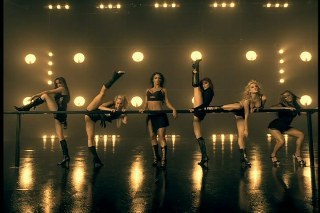 This is a wide angle shot of a few seconds of the music video. Here the girls from the group are all in positions that could be seen as provocative to audiences. It creates the question do women use their bodies in order to be looked at by men and receive attention in music videos and the industry? However this could then become replicated in everyday life, every time a women is showing parts of her body will it be seen as provocative by people? and will this create further issues of men taking advantage of women or exploiting them because of something that is presented in a music video?
These are the main features of the male gaze theory
- The representation of women as a sexual fantasy and from a heterosexual male point of view.
- Scopophilia- the pleasure involved in looking at other peoples bodies.
- patriarchal society.
- objectification of female characters.
- Active male and passive female.
- men- controlling subjects.
- women as an image.
- men do the looking and the women are there to be looked at.
- needs of the male ego.
All these can apply to a number of music videos and open up the idea that society is creating dangerous environments for not only women but males and children also.
 Acceptance of exploitation in music videos could lead to people thinking its okay to abuse and exploit women in everyday life. Here are a few shocking statistics that i found in relation to current sexual abuse.
- 1 out of every 6 American women has been the victim of an attempted or completed rape in her lifetime
- 17.7 million American women have been victims of attempted or completed rape.
- 9 of every 10 rape victims were female in 2003.
attempted rape for women by race:
- All women: 17.6%
- White women: 17.7%
- Black women: 18.8%
- Asian Pacific Islander women: 6.8%
- American Indian/Alaskan women: 34.1%
- Mixed race women: 24.4%
- Girls ages 16-19 are 4 times more likely than the general population to be victims of rape, attempted rape, or sexual assault.
These statistics really did shock me when reading around the subject. The role singers and performers have should be a positive one, represented through their music video. They have a responsibility and have the power to make the world a better place, its about time more stars use the advantage they have and encourage equality, safety and fairness in today's societies.


